Artist Hongrok Kim
Graduated from Hongik University College of Fine Arts, Department of Painting
1985. 3. 14.
“It's very impressive and beautiful.”
“It's just a wrapping paper without any ingredients, but adding the value with diamonds has a new meaning. I think it's a magic that makes you look closely at the work to find out what it means. I can't take my eyes off it.”
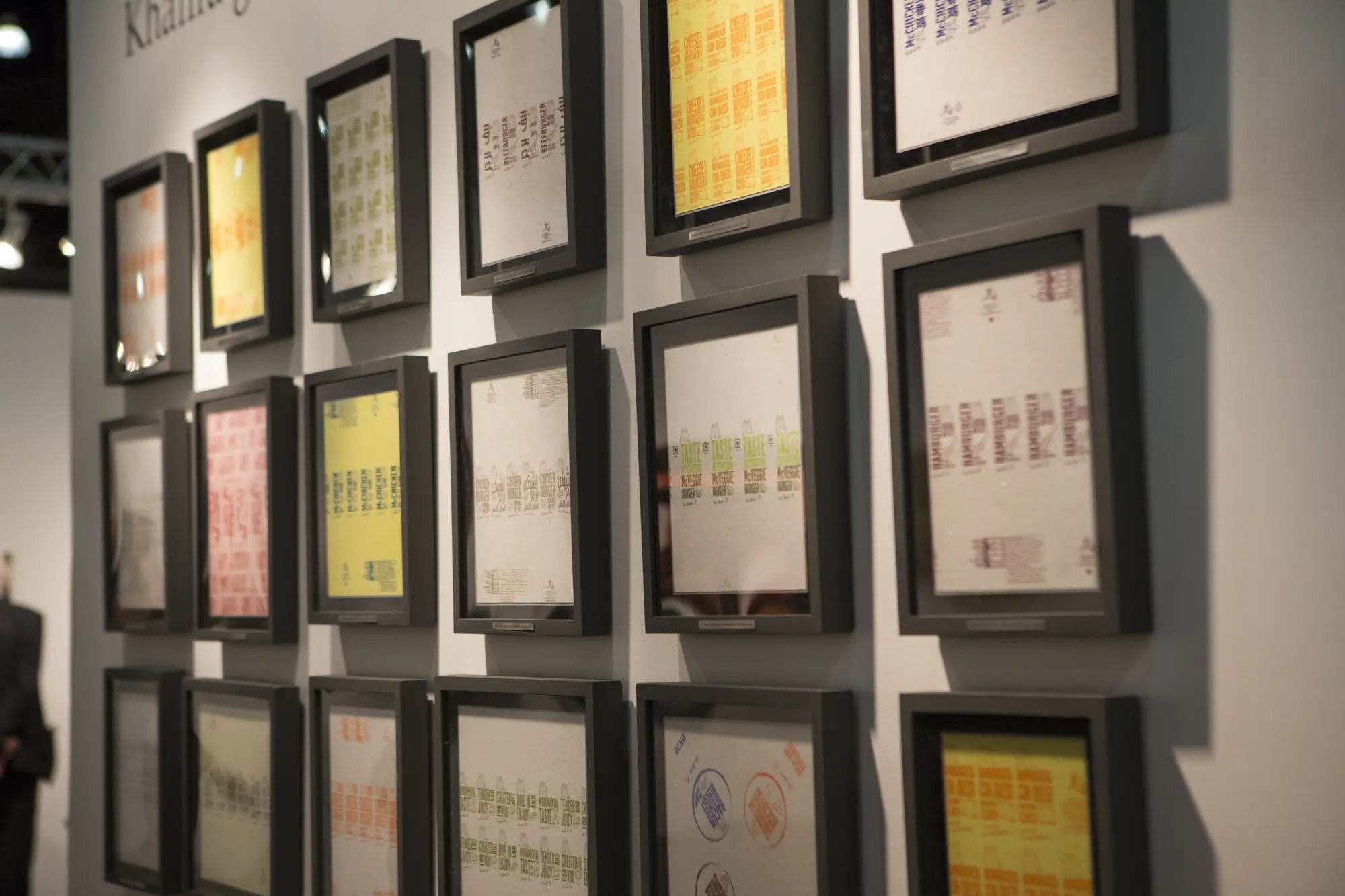
At the LA ART SHOW in December 2013, artist Kim Hong-rok presented 18 works of ‘The Beginning of Authenticity Recovery: McDonald’s.’ The combination of waste hamburger wrappers and diamonds was the artist's bold intention to transform our familiar perception by adding heavy materials to light materials that everyone has encountered at least once.
The method of creating works can be said to be objective and realistic, and artist Kim Hong-rok started from pure painting and developed in a direction that favors this objective method of expression.
Realistic Expressionism: Communicate by raising topics
We introduce Korean contemporary artists who go beyond the framework of canvas painting and communicate with subjective audiences through objective performance, photography, and media.
Kim Hong-rok was born in March 1985, graduated from Whimoon High School, and entered the Painting Department of Hongik University College of Fine Arts through a special selection process in 2005. He showed outstanding talent in a variety of artistic fields, including music, calligraphy, and art, to the point where he had experience playing the flute, which he had learned since childhood, in the municipal symphony orchestra. Between music and art, he decided to pursue artistic activities using art as a tool and chose FINE ART (painting) as his major.
Writer Kim Hong-rok refused to be called a student at school. He refused to confine himself to the mold of a student. Therefore, the artist created a personal art studio and actively interacted with various artists working in various fields such as photography, video, modeling, and actors at the time. He was given the nickname ‘Professor’ because he enjoyed discussing various topics with his classmates based on various experiences he had learned outside of school. He had lively debates not only with his classmates but also with his advisors. The subjective impressions and perspectives of various commentators on a single event excited artist Kim Hong-rok and made him strive to find a single correct answer, such as the truth.
Author Kim Hong-rok believed that the author could not present the appreciation or meaning of the event, and that it was up to the audience to find their own insights. Therefore, starting in 2008, when he was in his second year at the College of Fine Arts, he excluded all emotions or meanings that involved the artist's subjectivity from his works and began to present objectified works with a single, pervasive theme of ‘the beginning of the restoration of authenticity.’
In 2008, the artist released a performance and photography work called A Clue to the Recovery of Authenticity: Brushing Teeth. What is teeth brushing? What does brushing your teeth mean to you? Why do we all brush our teeth as a matter of course? With one act, the author is asking countless questions. You may be able to look back and think about many things about this. Is brushing your teeth simply an act of oral hygiene? Or can we reflect on something through this?
At that time, the author noticed that even primitive tribes in the jungle brushed their teeth and thought that the act of brushing teeth was a naturally occurring common language around the world and the most powerful medium of communication. By looking at the place or situation in which the artist brushes his teeth, we can better understand what he wants to objectify through the performance.
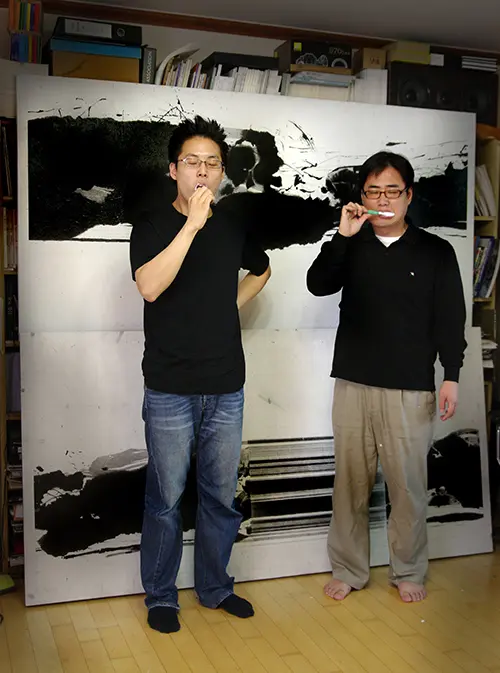
A Clue to the Recovery of Authenticity :
Jongsik Choi
The beginning of restoration of authenticity: Choi Jong-sik /
Lamda print, 2008, Hongrok kim
Choi Jong-sik is an artist who graduated from the Department of Painting at Hongik University and was a professor at Hongik University in 2008.
What did the artist want to communicate while brushing his teeth in front of his work?
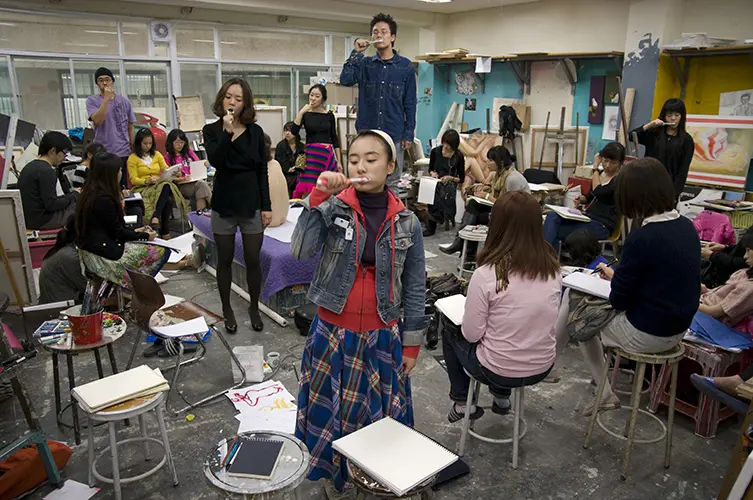
A Clue to the Recovery of Authenticity : Nude Drawing Class
The beginning of restoration of authenticity: Nude practice room / Lamda print, 2008, Hongrok kim
The above performance occurred during a practical class on nude drawing. Why did the author perform during a class with a nude model?
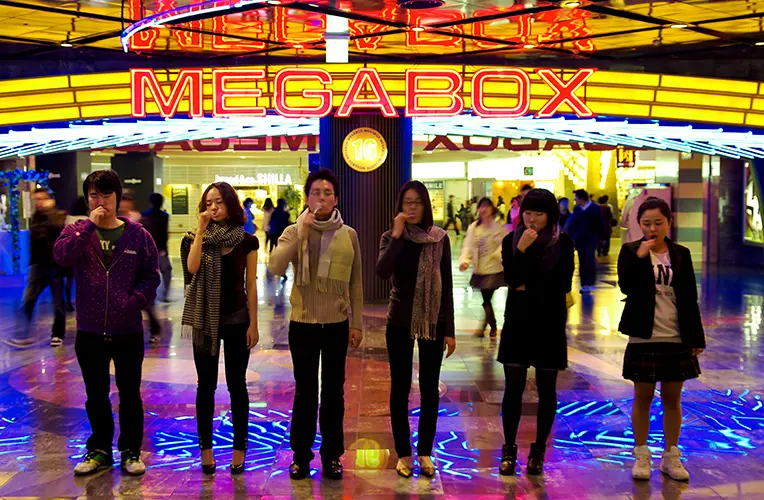
A Clue to the Recovery of Authenticity : Megabox
The beginning of restoration of authenticity: Megabox / Lamda print, 2008, Hongrok kim
In particular, the teeth-brushing performance at ‘Megabox’ in COEX may feel somewhat unfamiliar, because while brushing teeth is usually done only in specific places such as private spaces or bathrooms, Megabox is a very open space to the public. COEX's Megabox is a place that handles video works called movies, and is also a clear commercial facility. What does brushing their teeth, which stands on the border between art and commerce, mean?
Brushing teeth in a place outside of the stereotypes reminds us of the act itself, allows us to accept a new medium of communication proposed by the artist, and makes us attempt to redefine ‘brushing one’s teeth.’
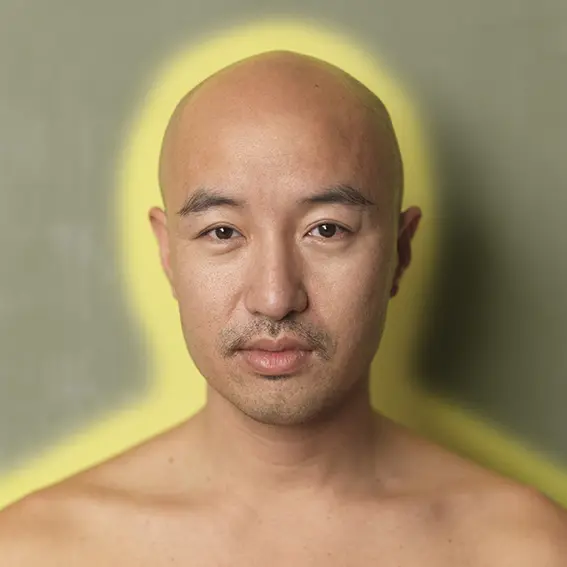
A Clue to the Recovery of
Authenticity : Seok-cheon Hong
The beginning of restoration of authenticity: Hong Seok-cheon /
Lamda print, 2011, 120x120cm
Hongrok kim
Do you know Hong Seok-cheon? If you know, what is Hong Seok-cheon? Does he mean anything? If it is meaningless, why should we think about him through this work?
After Hong Seok-cheon suddenly came out in 2000, he went through a difficult time in seclusion, being excluded from all broadcasts and criticized by the public. In 2011, when times and situations changed, the media reflected on him again, and his popularity recovered with the public, artist Kim Hong-rok met Hong Seok-cheon and created his work. Are Hong Seok-cheon in 2000 and Hong Seok-cheon in 2011 different people? If he has not changed, what has changed between us in 2000 and 2011? How will we be different in 2024?
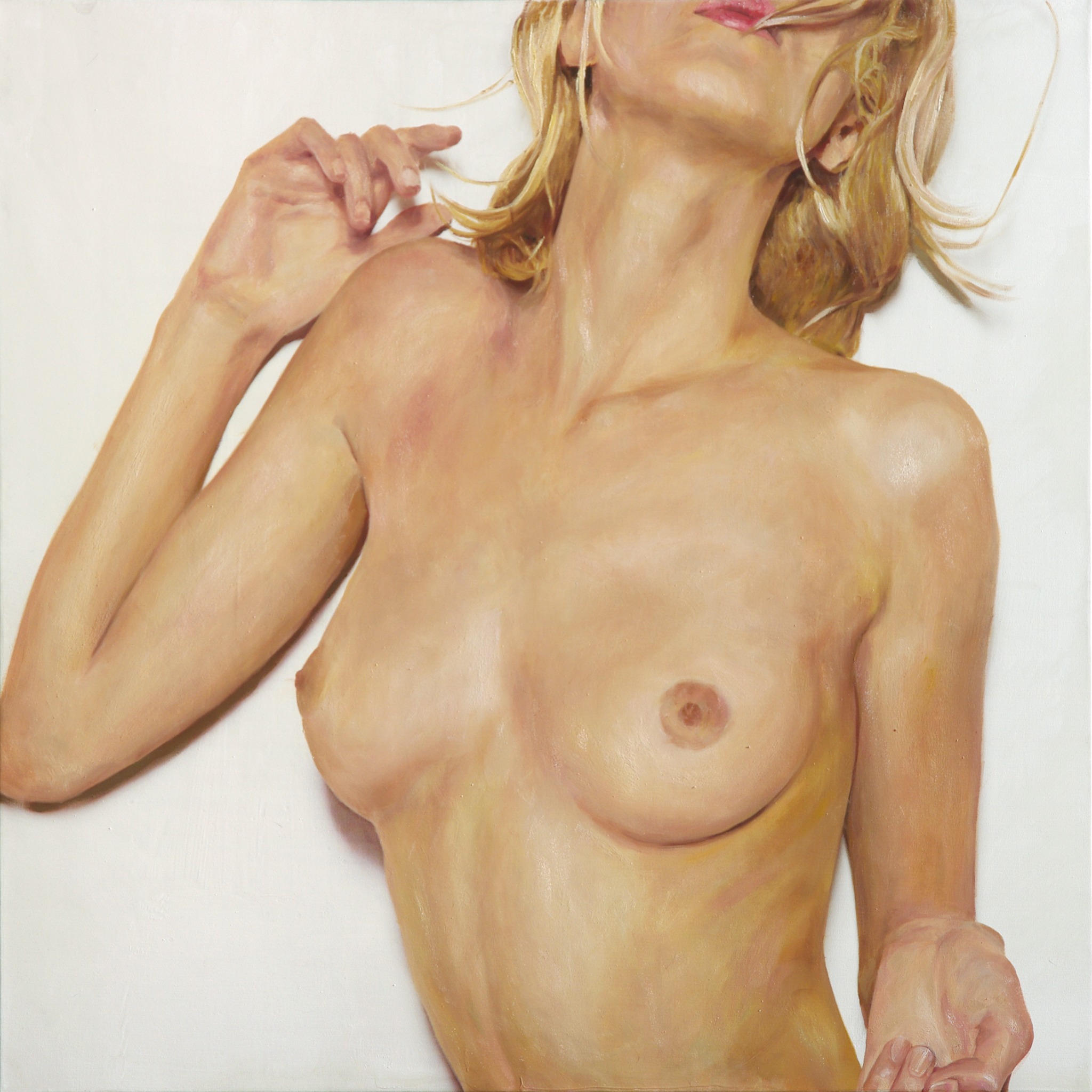
Oil on canvas, 120x120cm, 2010, Hongrok kim
There is an interesting anecdote in the above work. When artist Kim Hong-rok, who was attending school, pursued diversity of expression through photography, performance, and installation rather than painting, his classmates were still struggling with paint in front of the canvas. Although artist Kim Hong-rok never disparaged painting, some of his classmates expressed hostility toward him, saying, “I take photos and perform performances because I’m not good at painting.” Instead of arguing with them verbally, the artist painted a ‘well-drawn’ painting on a large canvas and explored various methods of expression to reflect on ‘the beginning of the restoration of authenticity.’
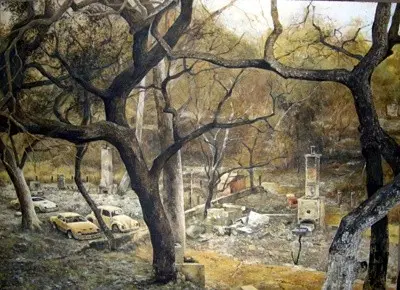
Egg tempera on a wooden board, 2004, Hongik University special selection portfolio work, Hongrok kim
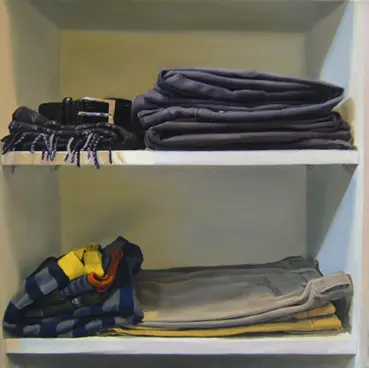
Oil on canvas, 2007, Self portrait, Hongrok kim
First solo exhibition The beginning of restoration of authenticity: Busso Raoul
A Clue to the Recovery of Authenticity : Bussot, Raul / 5 Days, 24 Hour, Performance, 2013, Hongrok kim
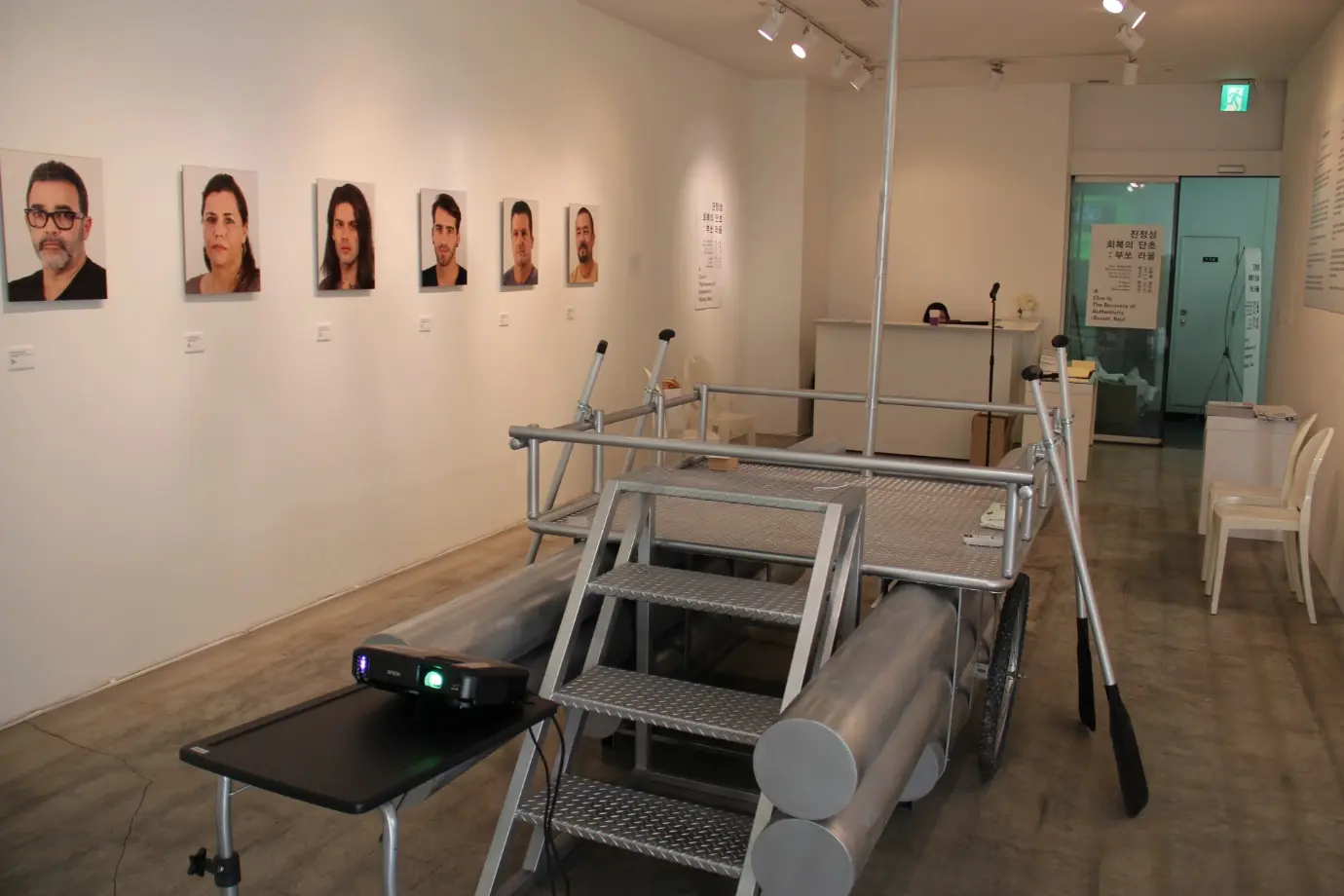
‘The Beginning of Recovering Authenticity: Busso Raoul’ is the first solo exhibition of artist Kim Hong-rok, which revisits the incident of a family who emigrated from the communist country of Cuba to the liberal United States on a raft 35 years ago.
In 2013, when Raúl Busso was five years old, his father decided to take his family and two friends to escape Cuba. They secretly assembled a raft in a dark mangrove forest, avoiding the gaze of the Cuban coast guard, and pushed the raft out to sea one late night. Busso Raoul said he remembers leaning against one another to keep warm in the middle of the cold sea. Busso Raúl, who was a child at the time, recalled that what he was most excited about in the United States was that, unlike in Cuba, he could watch cartoons on television as much as he wanted without power cuts. However, not long after they left, they encountered a torrential storm and were driven by strong winds and had to drift for several days without knowing their location. On the fifth day after leaving Cuba, when the food they brought with them was running out, they saw a light shining in the distance and were eventually discovered and rescued by the U.S. Coast Guard. 20 years later, artist Kim Hong-rok met Raoul and attempted to rediscover ‘The Beginning of the Restoration of Authenticity: Busso Raoul’ by reenacting the events he experienced over the course of five days.
The artist created a raft of the same size and shape as the one Raoul's father made and installed it in the gallery. They ate, slept, and lived on a raft with sails for five days. Their food consisted of Spam, chocolate, and water, the same food that Raoul's family had in 2013.
The author very actively shared his experiences from 20 years ago with the audience through his work. In this way, interaction with the audience becomes a large part of the performance itself.

filmed by U.S.A Coast Guard / Palm Beach, Key West, USA / 00:06:50 / 1993
The time and place of this work are also significant. The past relationship between the United States and Cuba shows similarities to the relationship between South Korea and North Korea. The story of the Busso family in this exhibition is one of the Cuban refugee stories, but through relationships, it becomes a universal refugee experience.
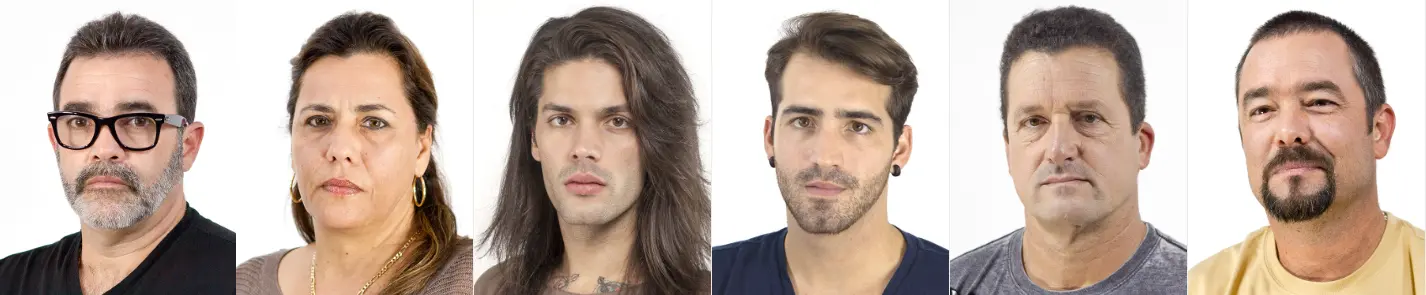
Lamda print, 2011, 40x50cm, Hongrok kim
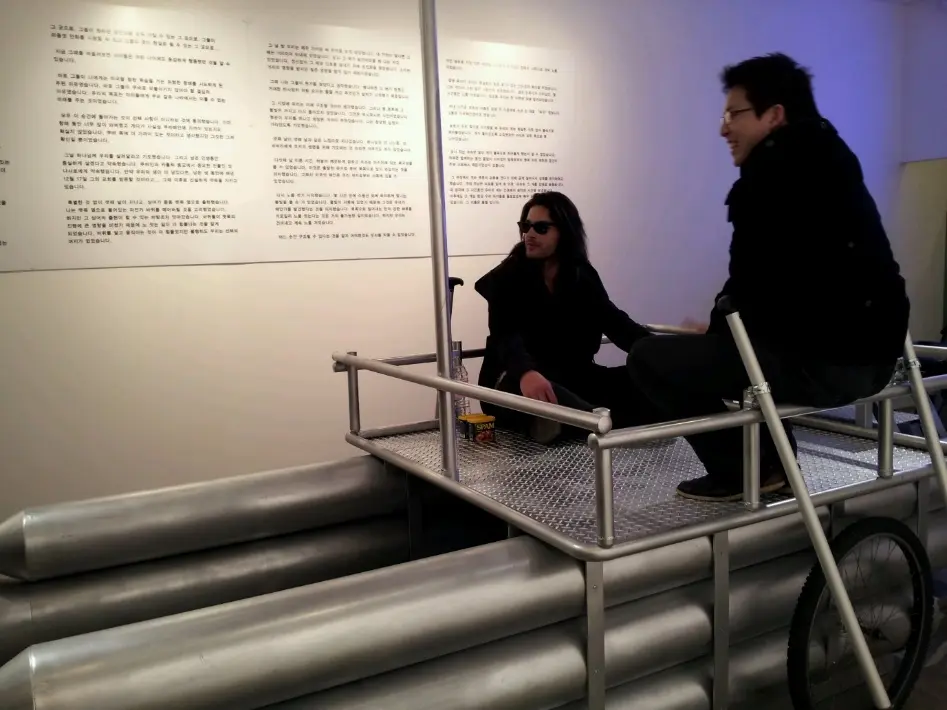
Many people visited the exhibition hall. Some people shed tears while reading the story of that time, and others climbed on the raft together and took pictures. There were people who wanted to have deep conversations and listen to stories about that time for a long time.
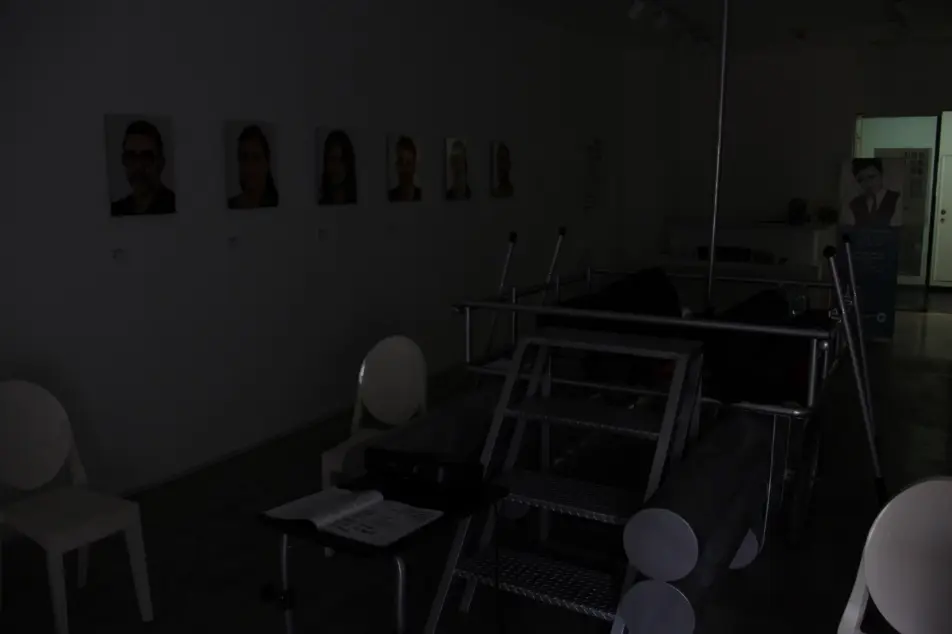
The author and Raoul spent five days eating and sleeping on the raft. At the time, Spam, chocolate, and water were all that Raoul's family had, and the quantity was not enough. So, the two spent five days eating very little at the exhibition hall.
This Cuban family was rescued by American coast guards while drifting in the open sea. It is said that the first food they ate upon arriving in the United States was McDonald's, a symbol of capitalism.
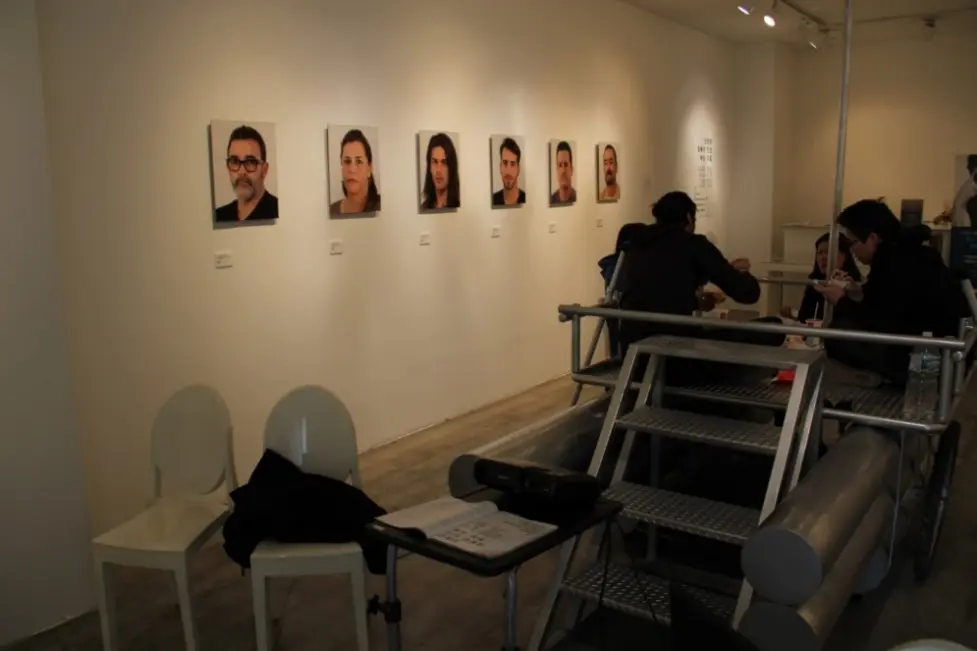
Kim Hong-rok and Busoraul eating McDonald's hamburgers on the day they finished the 5-day drifting performance
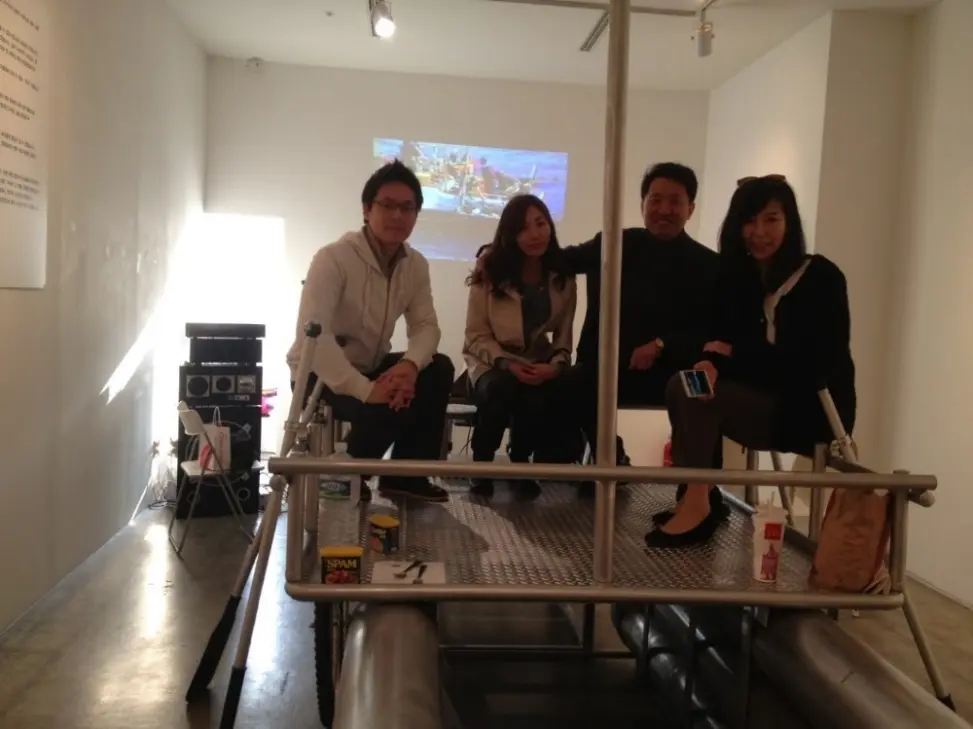
‘Liberal’ Seoul Mayor Oh Se-hoon and his family welcomed and congratulated him on the last day of the exhibition.
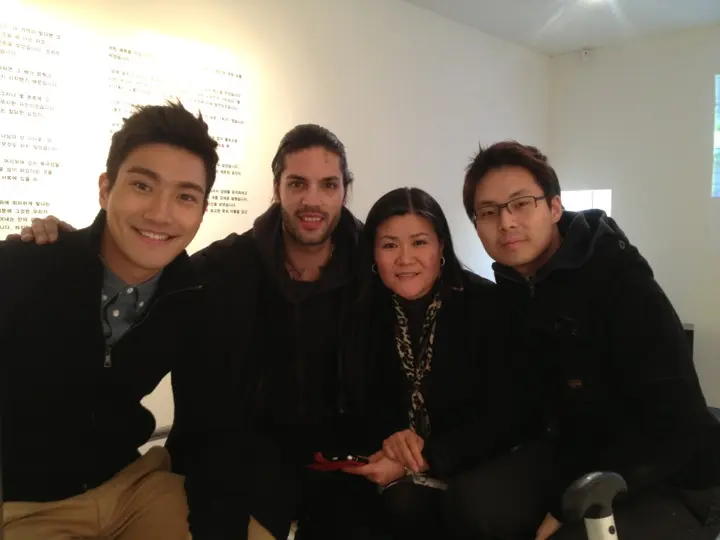
Singer Choi Siwon visits the exhibition hall
McDonald's operates franchises almost entirely in countries where liberalism and capitalism are well-established. If artist Kim Hong-rok wanted to gain insight into liberalism with the first exhibition, the second exhibition naturally moves on to a story about ‘capitalism’ through the McDonald’s they first ate.
Second solo exhibition The beginning of restoration of authenticity: McDonald's
A Clue to the Recovery of Authenticity : McDonald’s / Mixed media, 2013, Hongrok kim
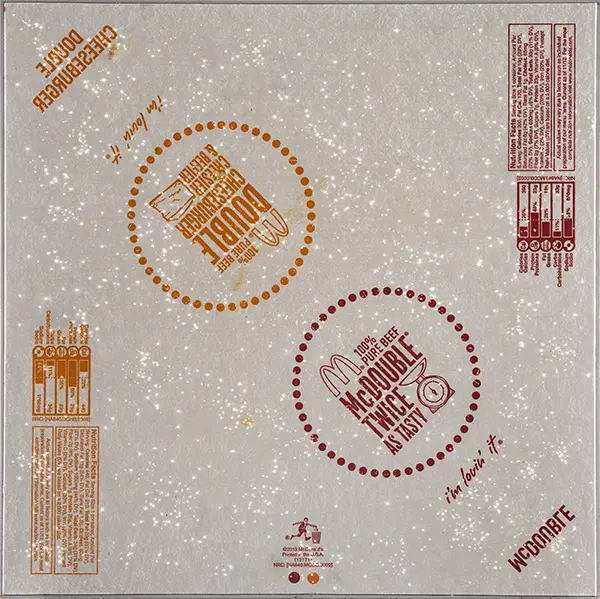 A Clue to The Recovery of Authenticity ; Chicago, America / Mixed media, 2013, Hongrok kim
The hamburger wrapper and diamonds of McDonald's, a representative American franchise, both symbolize capitalism. It is a packaging material that becomes trash after being discarded, but adding expensive diamonds to it made us look back and pay attention to the liberalism and capitalism that we take for granted.
It can be said to be a work created to help those who risked their lives to come over from Cuba in the past experience McDonald's, which was the first time they tasted liberalism and capitalism, from our current perspective.
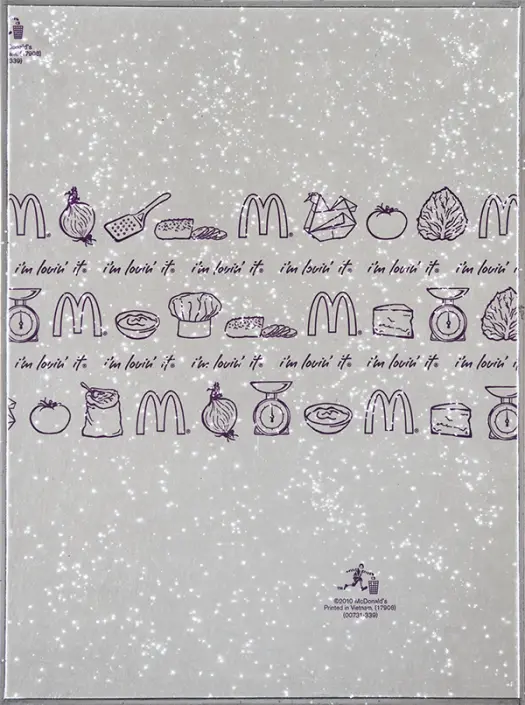 A Clue to The Recovery of Authenticity ; Ho Chi Minh/ Mixed media, 2013, Hongrok kim
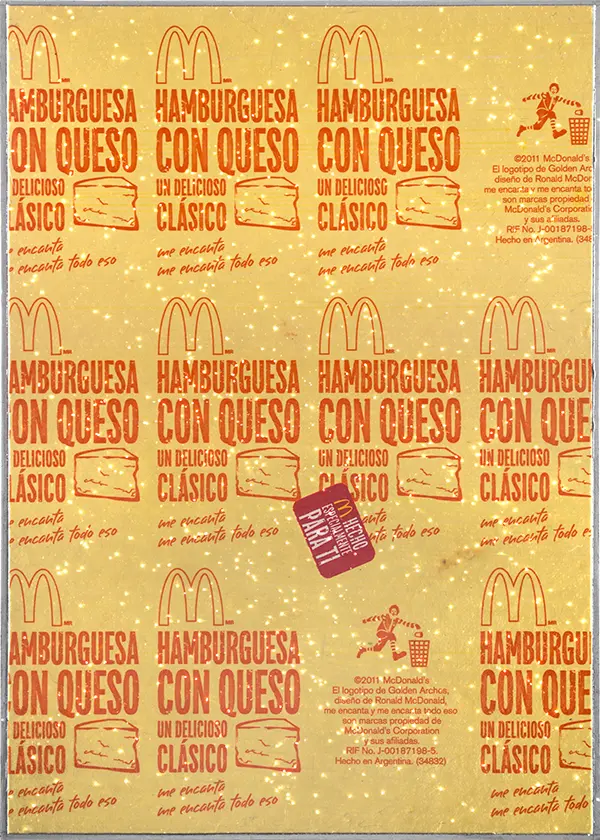 A Clue to The Recovery of Authenticity ; Buenos Aires, Argentina / Mixed media, 2013, Hongrok kim
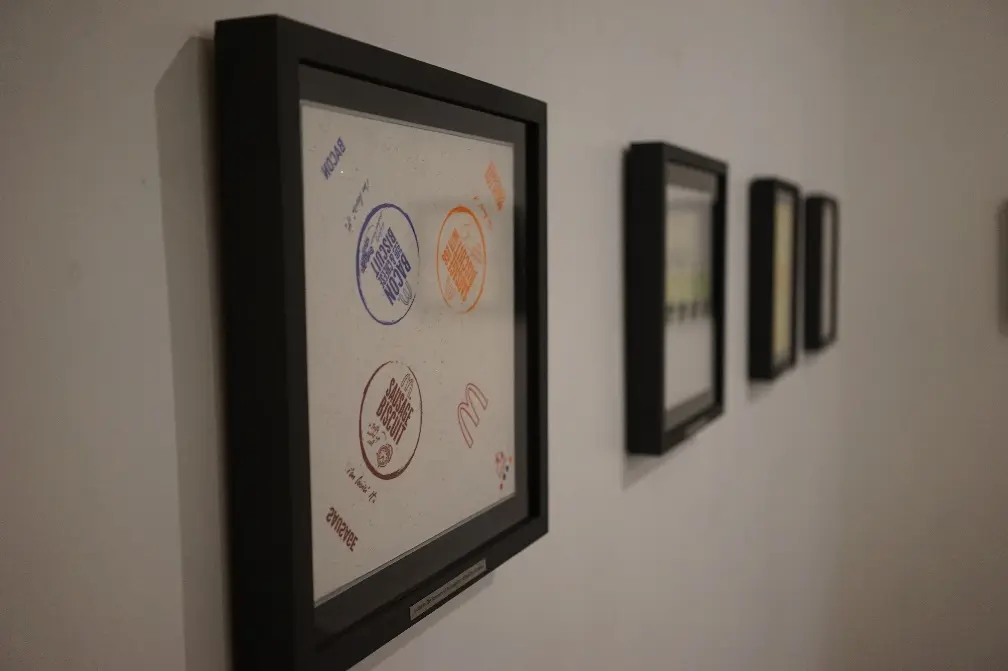 A Clue to the Recovery of Authenticity : McDonald’s / Mixed media, 2013, Hongrok kim
With the help of many people around the world, the artist collected McDonald's hamburger wrappers from 20 countries and created 30 works by adding diamonds to the wrappers. This work was exhibited not only domestically but also at the LA ART SHOW, encouraging more people around the world to think about ‘The Beginning of Authenticity Recovery: McDonald’s.’
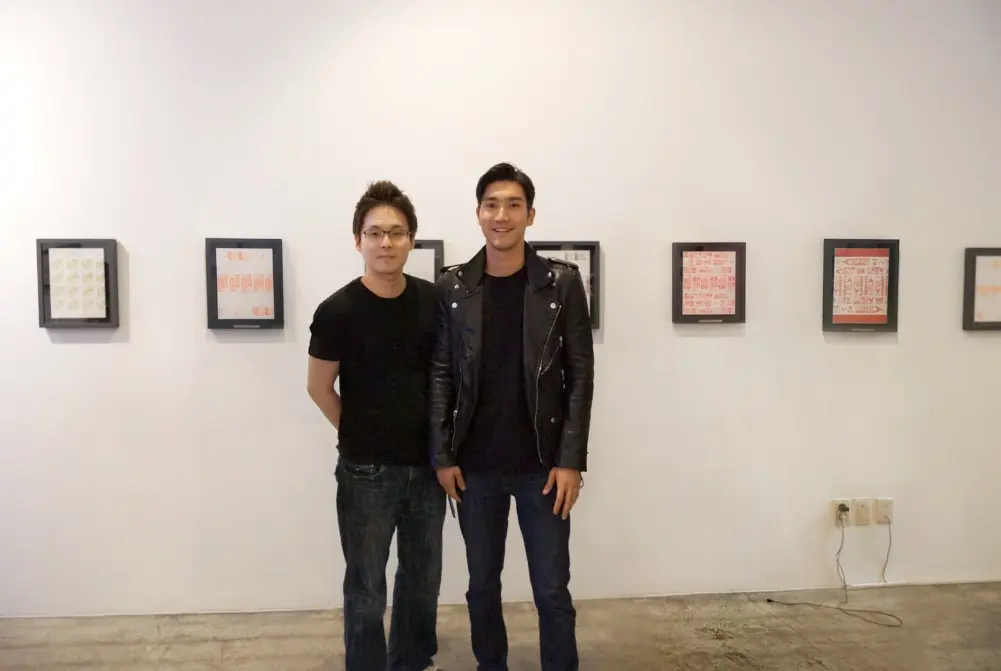
Singer Choi Siwon visits the exhibition hall
The author tried to collect hamburger wrappers from around the world by contacting Korean embassies in each country. To help the author, singer Choi Siwon announced this news to his fans, and overseas fans from all over the world collected and sent hamburger wrappers. Celebrities who had plans overseas also participated and were able to collect hamburger wrappers from various countries around the world.
We probably have preconceptions and stereotypes about this world-famous brand. Therefore, most people were able to vaguely guess the artist's intention in using McDonald's packaging, but the question of why a Korean artist is working to make 'McDonald's' so valuable must be considered in many ways, including historical and social background and ideological conflicts. What is McDonald's in America? in korea? What about people in Iran or North Korea who don't have McDonald's? Do they think of McDonald's too?
A Clue to the Recovery of Authenticity : McDonald’s / Mixed media, 2013, Hongrok kim
Unlike past foreign writers who used ‘McDonald’ to criticize capitalism, artist Kim Hong-rok used McDonald’s wrapping paper as a material to shed positive light on the value of capitalism. At the time of collecting wrapping paper, the author received responses from numerous countries that were not yet socialist or had a low economic level because capitalism had not yet taken root, saying, ‘There is no McDonald’s here.’ McDonald's fast food, which we have often criticized, is said to be unavailable in some countries.
The author tried to look at himself again with a farsighted perspective and re-perceive the value of capitalism positively.
Third solo exhibition The beginning of restoration of authenticity: Military sex slaves
A Clue to the Recovery of Authenticity : Military Sex Slave / Movie, installation, 2015, Hongrok kim
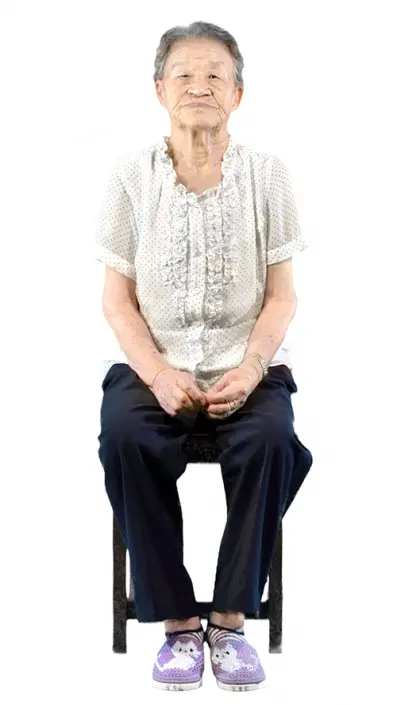 A Clue to the Recovery of Authenticity : Ok-seon Park
The beginning of restoration of authenticity: Park Ok-seon / projection on cotton, 2015, Hongrok kim / 00:00:44
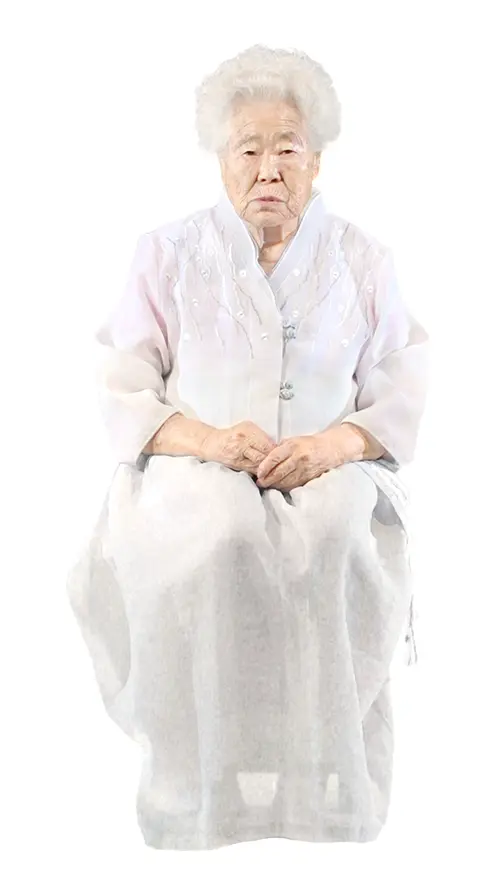 A Clue to the Recovery of Authenticity : Ok-seon Lee
The beginning of restoration of authenticity: Lee Ok-seon / projection on cotton, 2015, Hongrok kim / 00:02:19
There is a word called ‘comfort women’ that every citizen of the Republic of Korea knows. Artist Kim Hong-rok opened a media exhibition using the words ‘military’, ‘sex’, and ‘slave’ in order to understand the facts more objectively and intuitively.
The third exhibition, ‘The Beginning of Authenticity Recovery: Military Sex Slaves’, attempted to talk about ‘imperialism’ using the ‘Japanese military sex slaves’, a part of World War II and victims of past history that are still alive today, as a clue.
‘The Beginning of Restoration of Authenticity: Military Sex Slaves’ is a work that projects the images of Korean grandmothers who suffered as sexual slaves of the Japanese military during World War II on a 2m high and 3m wide installation made of white cloth. At the time of creating the work, the artist was asked by grandmothers, ‘Are you a reporter?’ or ‘Are you here to take pictures of the portrait?’ There were grandmothers who, upon hearing that they were going to create a work of art, hurriedly went into their rooms to comb their hair neatly or change into nice clothes. With the words, ‘Thank you for your interest in us,’ he made warm eye contact with the artist and began filming the work with a comfortable smile. Perhaps that's why, contrary to the violent title of the exhibition, the expressions on the faces of the subjects were calm and kind. Being a victim does not mean that you always live in fear and vent your anger. Unlike the frames in the media that report ‘victim-like’ appearances, the grandmothers in the artwork were ‘Park Ok-seon’, ‘Kim Gun-ja’, ‘Kang Il-chul’, ‘Kim Soon-ok’, and ‘Lee Ok-seon’ who live with us today.
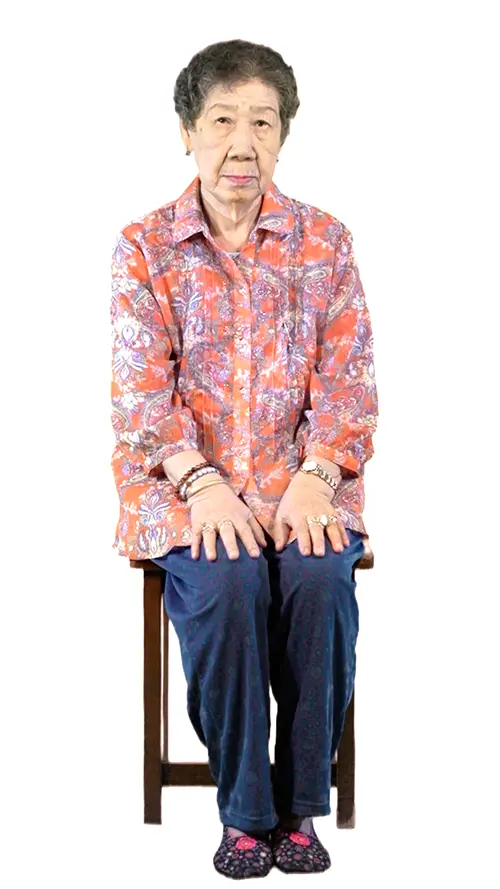 A Clue to the Recovery of Authenticity : Il-chool Kang
The beginning of restoration of authenticity: Kang Ilchul / projection on cotton, 2015, Hongrok kim / 00:03:45
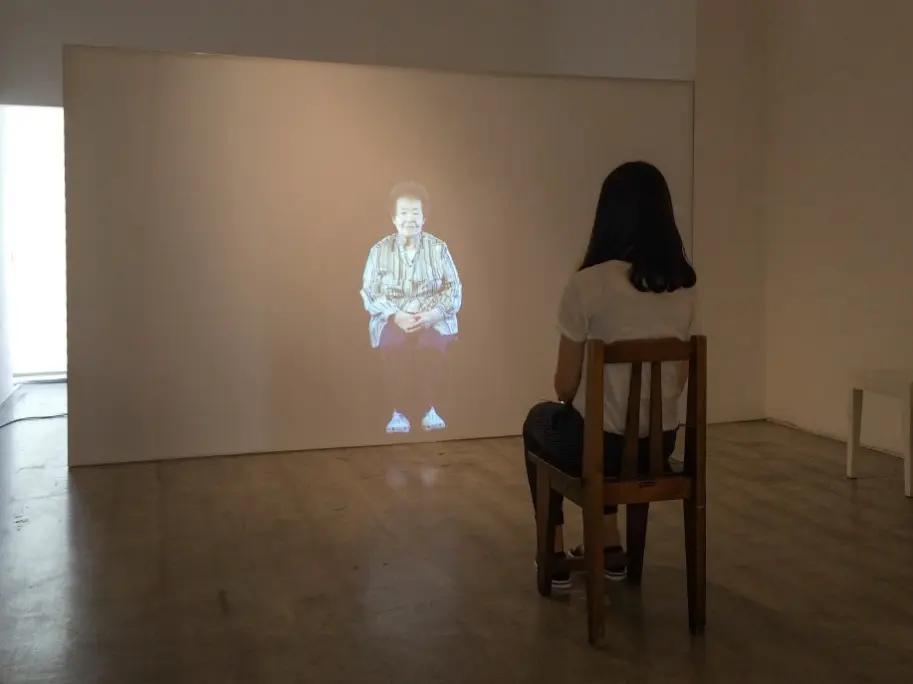 In the video work, the grandmothers sit in a place with no background and gaze comfortably at the audience, without any words, facial expressions, or gestures to convey specific emotions. This can be said to be an objective portrayal that fits the artist's purpose of ‘recording history through modern art,’ and the fact that it was produced so that the audience can make eye contact with the grandmothers shows the role of modern art in ‘reflection and participation of the times.’
A visitor meeting the late Kim Gunja through her work
The artist placed the chairs that the grandmothers sat on when creating the work in the exhibition hall and made them face each other. The grandmothers do not say anything, but by making eye contact with the audience, they are pouring out deep words that are easier to understand than any other language.
On July 23, 2017, grandmother Kim Gun-ja, who participated in the exhibition, passed away at the age of 91. When Kim Gun-ja was 16, she was kidnapped and taken to a comfort station in China, where she suffered hardships. Afterwards, she dedicated her life to testifying about Japan's war crimes and helping others through donations. Kim Gun-ja attends weekly Wednesday meetings and testifies to the hardships of life in comfort stations, and has also testified at the U.S. Congress hearing on Japanese military comfort women. She donated all her life savings to a scholarship foundation, and about 250 students received her grandmother's funds. The author still has a photo of him smiling while proudly wearing the Presidential Medal of Arts on his chest while filming his art work.
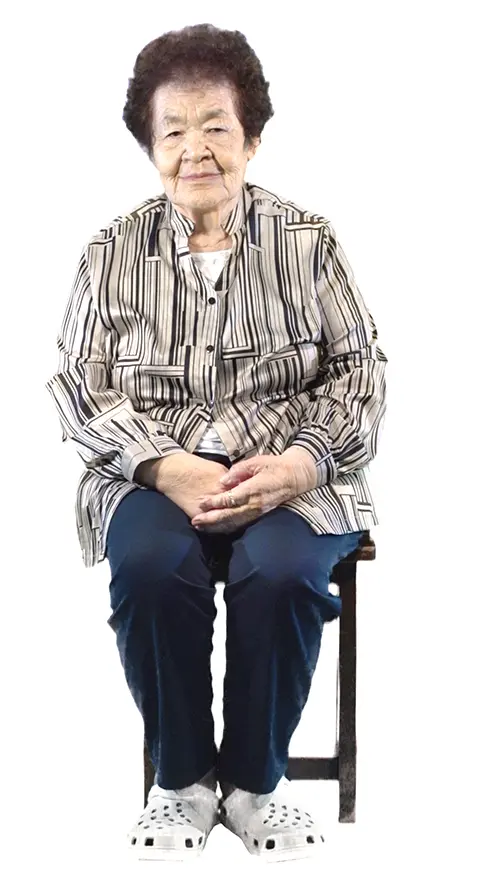 A Clue to the Recovery of Authenticity : Kun-ja Kim
The beginning of restoration of authenticity: Gunja Kim / projection on cotton, 2015, Hongrok kim / 00:04:21
The work provides an opportunity to judge imperialism through the images of grandmothers who are victims of ‘imperialism’ and allows us to look at ourselves as we live forgetting the many pains and sufferings of past history. In addition, it will provide an opportunity for encounters that transcend time and space, not only for those of us who share the last days of our grandmothers' lives, but also for future generations. As a result, the grandmothers’ participation in the work can be said to be the result of their sincere efforts to restore the past, present, and future world so that the history of ‘military sexual slavery’ is not repeated. This is where the work gains authenticity and permanence.
There may be many reasons for living life, but life can be seen as ‘the process of gaining enlightenment.’ Artists gain enlightenment through their works. For the artist, work is something to be immersed in, a lifelong destiny and life itself that must be explored and expressed. However, as ordinary people, artists are also constantly asking questions and struggling to find answers, such as what it means to them to create their destined work, what kind of enlightenment they gain through their work, and why they must create work in the end.
Artist Hongrok Kim's work does not seek to instill any message into the audience.
The color of the paint, the texture of the brush intended by the artist, and various pictorial expressions often evoke a certain emotion and sympathy in the audience because they clearly reflect the artist's inner self. In order to exclude this, artist Kim Hong-rok is looking for a way to introduce his work to subjective audiences with minimal intervention and objective expression methods.
For artist Kim Hong-rok, a work of art is ‘a clue with a method of artistic expression’ used to convey the topic of ‘authenticity’ to the audience. The word ‘recovery’, which appears in all work titles, is a state that is constantly changing and cannot be defined, and although it is impossible to completely approach the essence, it means the process of trying to get closer to the essence.
In other words ‘Authenticity’ To communicate with the audience whatis ‘Dancho’ By throwing out, each individual realizes this through their own insight. ‘Recovery’We are continuing to fight for what we want to do.